


Retatrutide 20mg – GLP-1/GIP/Glucagon Research Peptide
$150.00
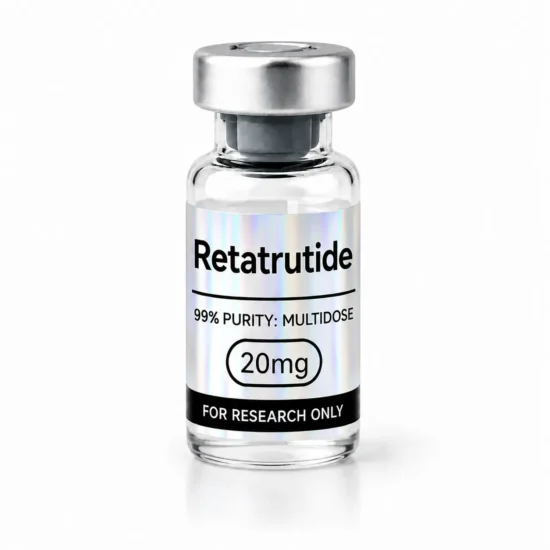
Retatrutide 20mg is a high-purity research peptide supplied as a white to off-white lyophilized powder in a sterile multidose vial. Retatrutide is an investigational peptide studied for its activity across the GLP-1, GIP, and glucagon receptor systems, making it relevant to laboratory research involving metabolic regulation, endocrine signaling, energy balance, glucose metabolism, and molecular biology. Research use only; not for human or veterinary use.
In stock (can be backordered)
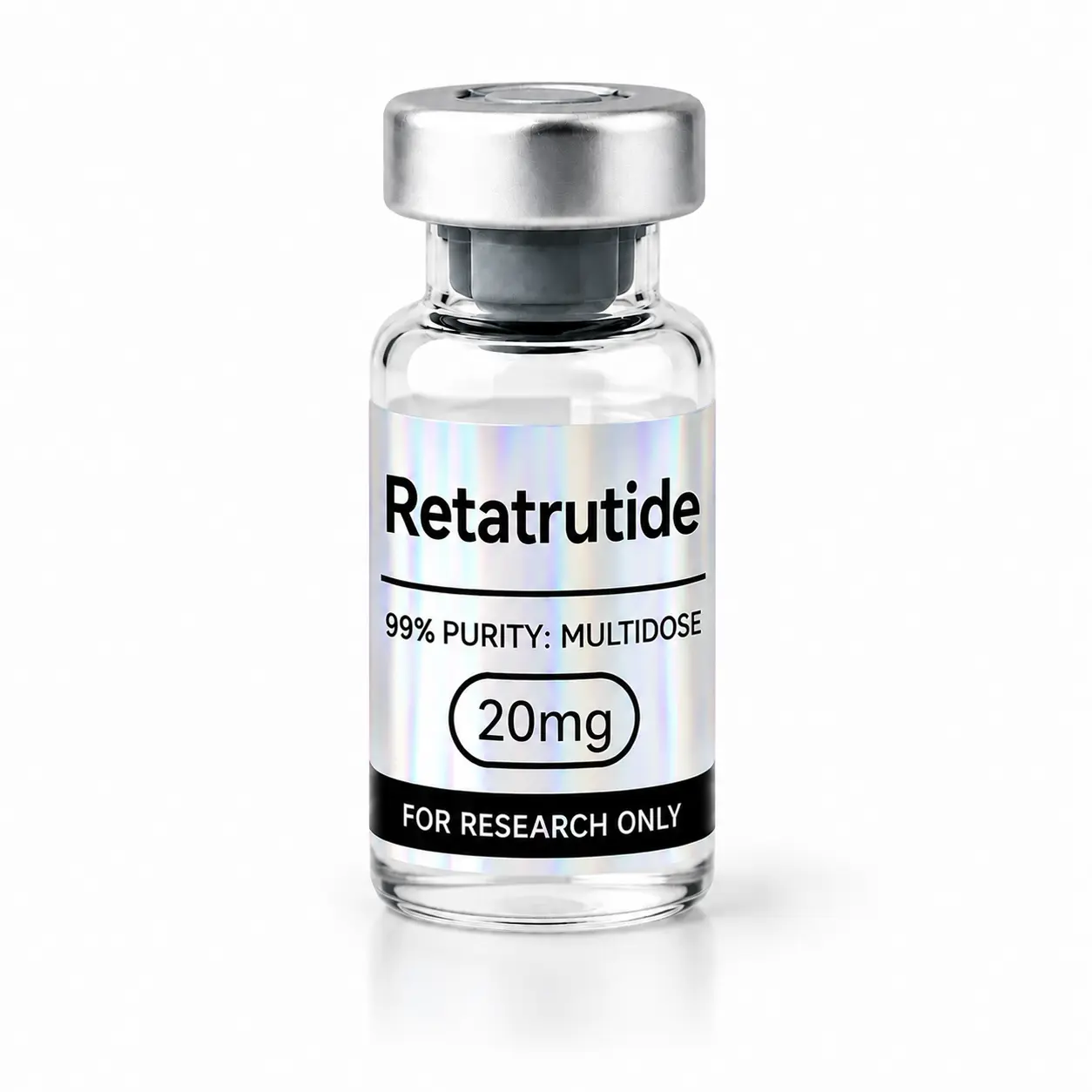
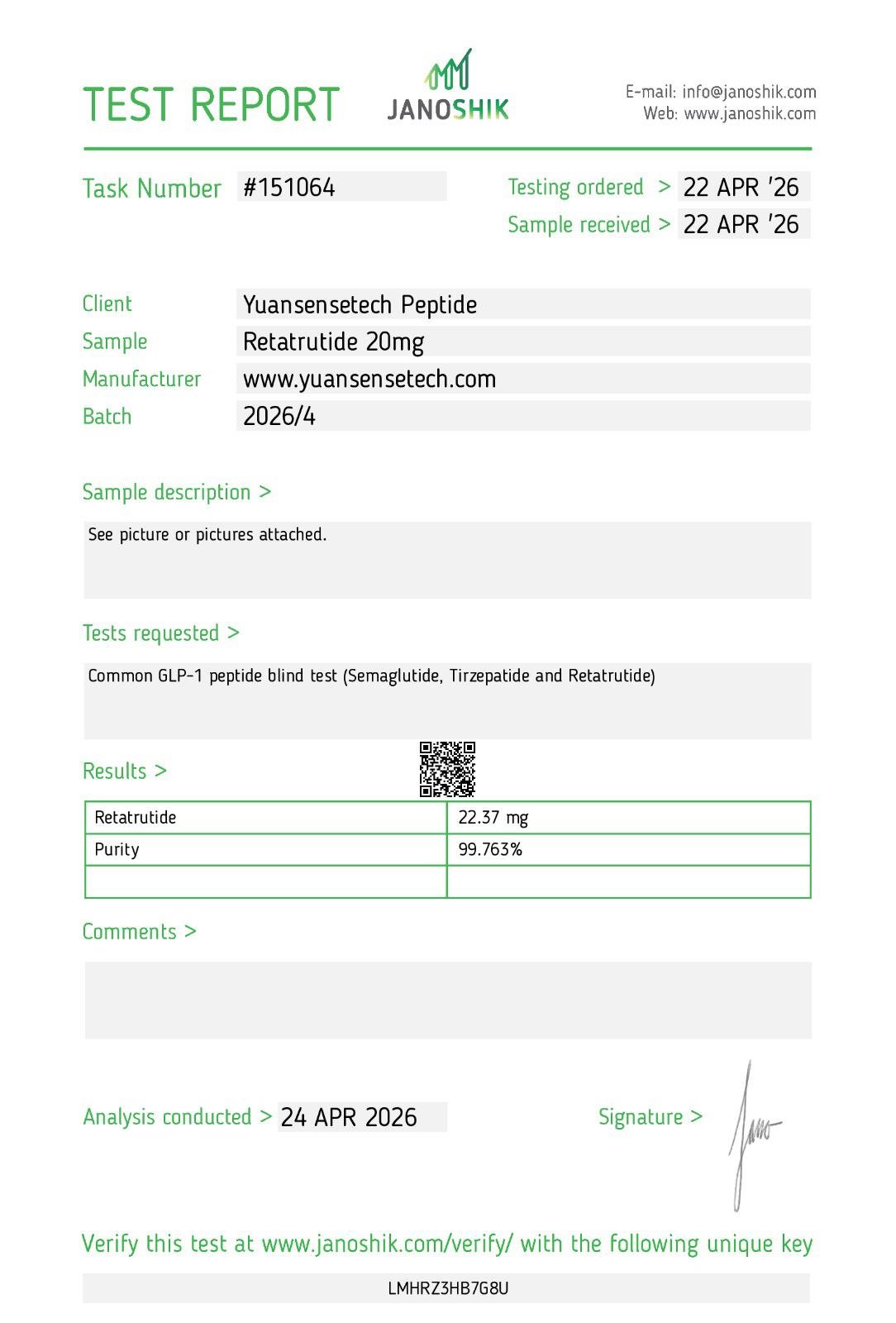
Retatrutide 20mg is a high-purity investigational research peptide supplied for laboratory and scientific research involving metabolic signaling, endocrine biology, and receptor pharmacology. The product is supplied as a white to off-white lyophilized powder with ≥99% stated purity in a sterile multidose vial.
Retatrutide, also known as LY3437943, is a single peptide with agonist activity at three receptor systems: the glucagon-like peptide-1 (GLP-1) receptor, glucose-dependent insulinotropic polypeptide (GIP) receptor, and glucagon receptor. This multi-receptor profile makes retatrutide an important research subject for investigating interconnected metabolic and endocrine signaling pathways.
This Retatrutide 20mg research peptide is intended exclusively for controlled laboratory and scientific research.
Product Specifications
- Product: Retatrutide
- Strength: 20mg
- Purity: ≥99%
- Format: Lyophilized powder
- Grade: Research Grade
- Appearance: White to off-white
- Packaging: Sterile multidose vial
- Storage: 2–8°C
- Intended Use: Laboratory research only
What Is Retatrutide?
Retatrutide is a synthetic peptide designed to interact with three hormone-receptor systems: GLP-1, GIP, and glucagon.
Unlike compounds that primarily target one receptor pathway, retatrutide has been investigated as a triple receptor agonist. Research has therefore focused on the interaction between these signaling systems and their relationship to metabolic regulation, glucose homeostasis, energy balance, and endocrine biology.
The three principal receptor targets are:
- GLP-1 receptor (GLP-1R)
- GIP receptor (GIPR)
- Glucagon receptor (GCGR)
The combined receptor profile provides researchers with a model for investigating how overlapping incretin and glucagon signaling pathways influence cellular and systemic metabolic processes.
Retatrutide 20mg Research Applications
Retatrutide 20mg may be studied in controlled laboratory research involving:
GLP-1 Receptor Biology
GLP-1 receptor signaling is an established area of endocrine and metabolic research. Retatrutide provides a research model for investigating GLP-1-related receptor activation and downstream cellular signaling.
GIP Receptor Signaling
GIP signaling is another major component of retatrutide’s pharmacological profile. Laboratory research can examine GIP receptor biology, intracellular signaling, and interactions between GIP and other metabolic pathways.
Glucagon Receptor Research
Retatrutide also activates the glucagon receptor. This makes it relevant to research investigating glucagon-associated signaling, metabolic regulation, and the interaction between glucagon and incretin pathways.
Metabolic Regulation
The combined GLP-1, GIP, and glucagon receptor activity of retatrutide provides a research model for studying interconnected metabolic pathways. Experimental investigations can examine receptor signaling, downstream molecular responses, and metabolic regulation under controlled conditions.
Glucose Metabolism Research
Retatrutide has been investigated in clinical and experimental research involving glucose regulation. For laboratory applications, the compound can serve as a research material for examining signaling pathways associated with glucose metabolism and endocrine regulation.
Energy-Balance Research
The interaction of GLP-1, GIP, and glucagon signaling makes retatrutide relevant to experimental research examining energy-balance pathways and the molecular mechanisms connecting endocrine signaling with metabolic processes.
Endocrine System Research
Retatrutide provides a research model for investigating multiple hormone-receptor systems simultaneously. This can be useful in studies examining endocrine signaling, receptor pharmacology, and interactions between metabolic hormones.
Molecular and Biochemical Research
Researchers may also investigate retatrutide in molecular studies involving peptide-receptor interactions, signal transduction, receptor activation, biochemical pathways, and related cellular responses.
Triple-Receptor Research Model
One of the defining characteristics of Retatrutide 20mg is its activity across three receptor systems.
GLP-1 and GIP are incretin-related signaling pathways, while glucagon represents a complementary endocrine pathway involved in metabolic regulation. Research into triple agonism therefore provides an opportunity to examine how these pathways interact rather than studying each receptor system independently.
Scientific reviews describe retatrutide as the most advanced example of a GLP-1/GIP/glucagon triple agonist and discuss the rationale for investigating combined receptor activation in metabolic research.
Research Literature
Retatrutide has progressed through extensive clinical research, making it a well-characterized subject in the scientific literature.
A Phase 2 randomized clinical trial published in The Lancet investigated retatrutide in adults with type 2 diabetes and confirmed its activity across the GIP, GLP-1, and glucagon receptor systems.
More recently, a 2026 Phase 3 randomized trial evaluated retatrutide in adults with type 2 diabetes and reported its effects on glycemic endpoints and body weight. These findings are clinical-study results and should not be interpreted as establishing this research product as an approved treatment or as evidence for personal use.
For laboratory researchers, this growing body of literature provides useful background for studying retatrutide’s receptor pharmacology and metabolic signaling.
Research-Grade Product Features
This Retatrutide research peptide is supplied with specifications designed for laboratory research:
- ≥99% stated purity
- Research-grade material
- White to off-white lyophilized powder
- Sterile multidose vial
- Refrigerated storage requirement
- Suitable for scientific and laboratory research
- Consistent product specification
Researchers should use their own validated laboratory procedures, institutional requirements, and applicable documentation when working with research compounds.
Storage
Store Retatrutide 20mg refrigerated at 2–8°C.
Protect the product from direct light, excessive heat, and moisture. Keep the vial appropriately sealed under suitable laboratory storage conditions.
Laboratories should follow their established storage, handling, documentation, and quality-control procedures.
Canadian Research and Regulatory Context
Canadian purchasers and laboratories should distinguish between a product being described as “research use only” and its regulatory status.
Health Canada has taken enforcement action concerning the illegal sale of unauthorized injectable peptide products in Canada. In July 2026, Health Canada announced a permanent injunction preventing Canlab Research from selling unauthorized injectable peptides in Canada. The agency stated that selling unauthorized prescription drugs in Canada is illegal.
Researchers and purchasers should therefore ensure that procurement, possession, handling, and laboratory activities involving peptide research materials comply with applicable Canadian laws and institutional requirements.
Related Research Products
Researchers investigating metabolic and peptide signaling pathways may also explore related BioMatrix research compounds.
For internal topical relevance, consider linking this page to the MOTS-c 10mg research peptide or another BioMatrix product associated with cellular metabolism and molecular research.
Research Use Only
For Research Use Only.
This product is intended exclusively for laboratory and scientific research purposes. Not for human or veterinary use.
This product is not intended to diagnose, treat, cure, or prevent any disease and should not be represented as a weight-management, diabetes-treatment, metabolic-treatment, or performance-enhancement product.
Researchers are responsible for following applicable laws, institutional requirements, laboratory safety procedures, and validated research protocols.

Reviews
There are no reviews yet.