
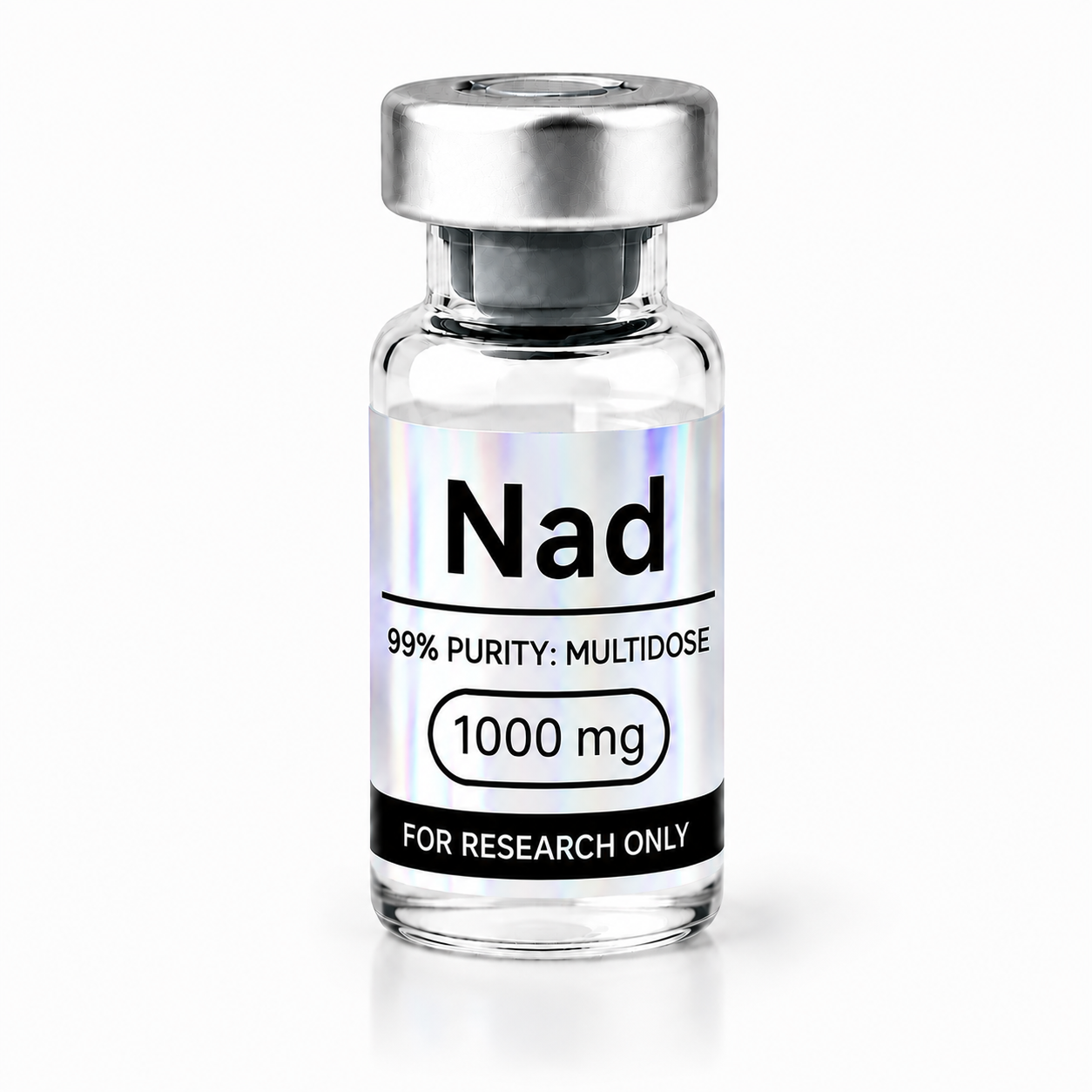
NAD+ 1000mg – Nicotinamide Adenine Dinucleotide Research Compound
$80.00
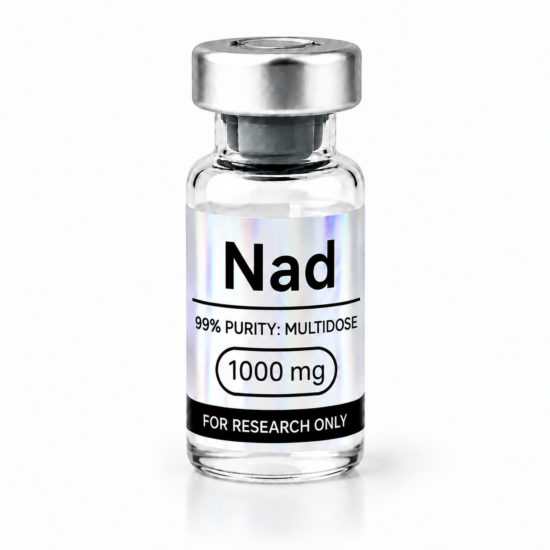
NAD+ 1000mg is a high-purity research compound containing nicotinamide adenine dinucleotide (NAD+), a naturally occurring coenzyme involved in cellular redox reactions and metabolic processes. Supplied as white to off-white lyophilized powder in a sterile multidose vial, this research-grade material is intended for qualified laboratory and biochemical research.
NAD+ is widely investigated in research involving cellular metabolism, mitochondrial function, energy-related pathways, DNA repair-associated processes, oxidative stress, enzyme activity, and cellular aging biology. With a stated purity of ≥99%, NAD+ 1000mg provides a defined research material for controlled scientific investigations.
For Research Use Only. Not for human or veterinary use.
In stock (can be backordered)
NAD+ 1000mg is a high-purity research compound containing nicotinamide adenine dinucleotide (NAD+), a naturally occurring coenzyme found throughout living cells. NAD+ plays a central role in cellular redox reactions and is involved in numerous enzymatic processes associated with energy metabolism, cellular signaling, and metabolic homeostasis.
Unlike peptide products in a research catalogue, NAD+ is a small-molecule coenzyme rather than a peptide. Its biochemical importance makes it a widely studied material in laboratory research involving cellular metabolism, mitochondrial biology, oxidative stress, DNA repair-related processes, and enzyme activity.
This NAD+ 1000mg formulation is supplied as white to off-white lyophilized powder in a sterile multidose vial, with a stated purity of ≥99%.
Product Specifications
- Product: NAD+ (Nicotinamide Adenine Dinucleotide)
- Strength: 1000mg
- Purity: ≥99%
- Format: Multidose Vial
- Grade: Research Grade
- Appearance: White to off-white lyophilized powder
- Storage: 2°C–8°C
- Protection: Protect from light and moisture
The defined 1000mg formulation provides researchers with a consistent research material for controlled biochemical and molecular investigations.
What Is NAD+?
NAD+ stands for nicotinamide adenine dinucleotide. It is a coenzyme present in living cells and exists in a redox relationship with NADH.
At the biochemical level, NAD+ participates in electron-transfer reactions and serves as a substrate or cofactor for multiple enzyme systems. Research literature describes NAD+ as an important component of cellular energy metabolism, redox homeostasis, DNA-repair-associated processes, and cellular signaling.
The cellular NAD+ pool is dynamic. NAD+ can be synthesized through multiple metabolic pathways and consumed by enzymes including sirtuins, PARPs, and CD38. Research into these pathways continues to examine how NAD+ availability and compartmentalization relate to cellular function.
NAD+ Research Applications
The NAD+ research compound may be relevant to laboratory investigations involving several areas of molecular and cellular biology.
Cellular Metabolism
NAD+ is closely associated with cellular metabolic reactions and redox chemistry. Laboratory research can investigate NAD+-dependent biochemical reactions and metabolic pathways under controlled experimental conditions.
Mitochondrial Function
Mitochondrial metabolism is an important area of NAD+ research. NAD+-dependent reactions contribute to cellular processes involved in energy metabolism, making NAD+ relevant to investigations of mitochondrial biochemical pathways.
Energy Production Pathways
NAD+ participates in electron-transfer reactions associated with cellular energy metabolism. Researchers can use NAD+ as a defined biochemical research material when investigating metabolic reactions and related enzymatic processes.
DNA Repair Research
NAD+ is involved in the activity of enzymes such as poly(ADP-ribose) polymerases (PARPs), which participate in cellular responses to DNA damage. Research literature therefore examines NAD+ availability in relation to DNA damage-response mechanisms.
Oxidative Stress Research
NAD+ metabolism is connected to cellular redox balance and oxidative-stress pathways. Researchers may investigate NAD+-dependent biochemical responses in experimental models involving oxidative conditions.
Enzyme and Cofactor Research
Because NAD+ participates in numerous enzyme-mediated reactions, it is an important subject in biochemical research examining cofactor utilization, enzymatic activity, and metabolic pathway regulation.
Cellular Aging Research
NAD+ biology is also an active area of aging research. Recent scientific reviews continue to examine NAD+ compartmentalization, metabolism, cellular stress responses, DNA repair, and age-associated biological processes.
NAD+ and Cellular Redox Biology
One of the fundamental research roles of NAD+ is its participation in redox reactions. NAD+ can accept electrons during biochemical reactions and is converted to its reduced counterpart, NADH.
This NAD+/NADH relationship is central to many metabolic pathways and provides researchers with an important system for investigating cellular energy metabolism and redox homeostasis.
The biological significance of NAD+ extends beyond electron transfer. Research also examines its role as a substrate for enzymes involved in processes such as protein modification, DNA-damage responses, and cellular signaling.
NAD+ and Mitochondrial Research
Mitochondria are highly active areas of cellular metabolism, and NAD+ is an important component of mitochondrial redox chemistry.
Laboratory investigations may therefore examine NAD+ in experimental models involving mitochondrial metabolism, oxidative phosphorylation, energy-related pathways, and cellular responses to metabolic stress.
These research applications concern biochemical and cellular mechanisms. Results obtained from a particular experimental model should be interpreted according to the study design and should not automatically be generalized to human outcomes.
Research-Grade NAD+ 1000mg
This NAD+ 1000mg research compound is supplied with a stated purity of ≥99%.
The material is provided as white to off-white lyophilized powder in a sterile multidose vial. Defined specifications and consistent research materials are important when conducting controlled laboratory experiments, particularly when comparing samples or reproducing biochemical results.
Researchers should review applicable batch documentation and the Certificate of Analysis where available before incorporating the material into an experimental workflow.
Storage
Store NAD+ 1000mg under refrigerated conditions at 2°C–8°C.
Protect the product from:
- Direct light
- Moisture
- Excessive heat
- Uncontrolled environmental conditions
Researchers should follow their institution’s established procedures for the storage and handling of laboratory research materials.
NAD+ Research in Canada
BioMatrix Compounds supplies NAD+ 1000mg strictly as a research-use material.
Canadian researchers and institutions should independently determine the regulatory requirements applicable to their intended research activities.
Health Canada currently lists NAD+ among examples of unauthorized injectable peptide drugs and warns that unauthorized injectable peptide products have not been assessed for safety, efficacy, and quality by Health Canada.
For current Canadian regulatory information, researchers should consult the official Health Canada resources concerning unauthorized injectable products.
Scientific Research Resources
Researchers interested in NAD+ biology can consult peer-reviewed scientific literature covering NAD+ metabolism, mitochondrial function, DNA repair, redox biology, and cellular aging.
For example, recent reviews describe NAD+ as an essential coenzyme involved in energy metabolism, redox homeostasis, DNA repair, and signaling, while also highlighting the complexity of NAD+ metabolism across different cellular compartments.
Related Research Compounds
Researchers investigating cellular metabolism and mitochondrial biology may also be interested in MOTS-c 10mg, another BioMatrix research product associated with mitochondrial-derived peptide research.
MOTS-c and NAD+ represent different classes of research materials: MOTS-c is a mitochondrial-derived peptide, while NAD+ is a small-molecule coenzyme. Studying different molecular systems can provide useful context for laboratory investigations into mitochondrial and metabolic biology.
Researchers can also explore other research compounds available through the BioMatrix Compounds catalogue.
Research Use Only Disclaimer
For Research Use Only.
This product is intended exclusively for laboratory research purposes. Not for human or veterinary use.
It is not intended for consumption, diagnosis, treatment, cure, or prevention of any disease or medical condition.
Information provided on this page is intended for research and educational context only and should not be interpreted as medical advice, therapeutic guidance, dosage guidance, or a recommendation for personal use.
Researchers are responsible for determining whether this research material is suitable for their intended laboratory application and for complying with all applicable federal, provincial, institutional, and laboratory requirements.
NAD+ 1000mg | ≥99% Purity | Nicotinamide Adenine Dinucleotide | Research Grade
Reviews
There are no reviews yet.