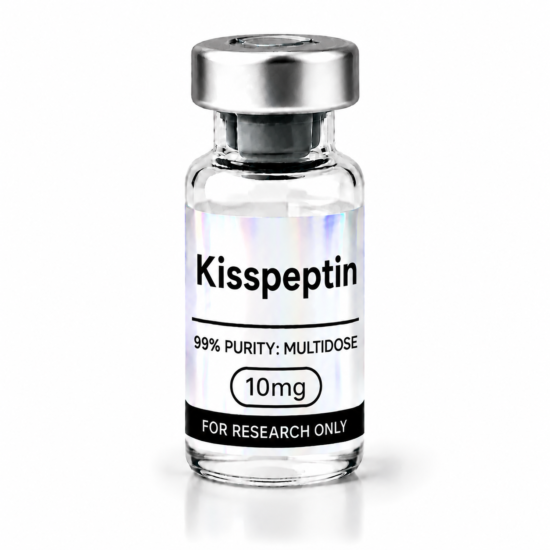
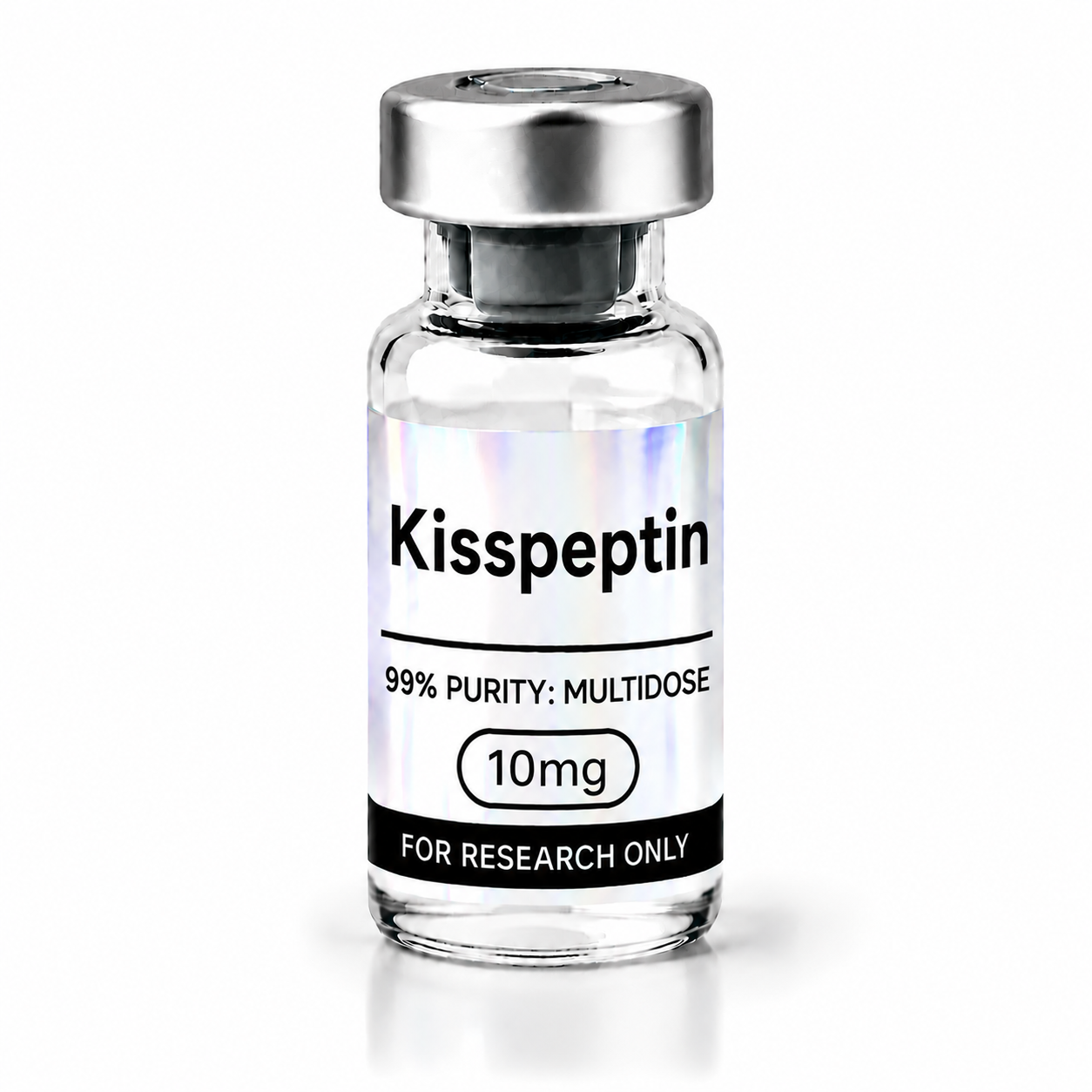
Kisspeptin 10mg – Reproductive Biology Research Peptide
$80.00
Kisspeptin 10mg is a high-purity research peptide supplied as a white to off-white lyophilized powder in a sterile multidose vial with a stated purity of ≥99%. Kisspeptin is widely studied in laboratory research involving Kiss1R receptor signaling, GnRH regulation, the hypothalamic-pituitary-gonadal (HPG) axis, reproductive biology, neuroendocrinology, and cellular signaling pathways.
This research-grade material is intended for qualified laboratory and scientific research involving peptide-receptor interactions, endocrine signaling, and molecular biology.
For Research Use Only. Not for human or veterinary use.
In stock (can be backordered)
Kisspeptin 10mg is a high-purity research peptide supplied as a white to off-white lyophilized powder in a sterile multidose vial with a stated purity of ≥99%. This research-grade material is intended for laboratory and scientific research involving reproductive biology, neuroendocrinology, peptide-receptor interactions, endocrine signaling, and molecular biology.
Kisspeptin is an important subject within reproductive neuroendocrinology research. Scientific literature has established the KISS1/KISS1R signaling system as an important component of the hypothalamic-pituitary-gonadal (HPG) axis, with extensive research examining relationships between kisspeptin signaling, gonadotropin-releasing hormone (GnRH) neurons, and downstream endocrine pathways.
For Research Use Only. Not for human or veterinary use.
Product Specifications
| Specification | Details |
|---|---|
| Product | Kisspeptin |
| Strength | 10mg |
| Purity | ≥99% |
| Format | Lyophilized Powder |
| Grade | Research Grade |
| Appearance | White to Off-White |
| Packaging | Sterile Multidose Vial |
| Storage | 2°C–8°C |
| Intended Use | Laboratory Research Only |
What Is Kisspeptin?
Kisspeptin refers to a family of neuropeptides encoded by the KISS1 gene and signaling primarily through the kisspeptin receptor, KISS1R.
The kisspeptin/KISS1R system is extensively investigated in reproductive neuroendocrinology because of its relationship with GnRH neuronal signaling and the HPG axis. Research has examined how kisspeptin signaling connects hypothalamic neuronal activity with downstream reproductive endocrine pathways.
KISS1R is a G-protein-coupled receptor and an important molecular target for research into neuropeptide-receptor interactions and intracellular signal transduction. Experimental studies have examined receptor expression, ligand activity, intracellular signaling, and the cellular mechanisms through which kisspeptin-related pathways influence GnRH-associated signaling.
Kisspeptin 10mg Research Applications
Kisspeptin 10mg can be used as a research material in controlled laboratory investigations involving several areas of molecular and endocrine biology.
HPG Axis Research
The hypothalamic-pituitary-gonadal axis is a major area of reproductive endocrinology research. Kisspeptin signaling is studied within this system to investigate relationships between hypothalamic signaling, GnRH neurons, and downstream endocrine pathways.
Research has identified kisspeptin/KISS1R signaling as an important component of HPG-axis regulation, making the pathway relevant to experimental investigations of reproductive neuroendocrinology.
GnRH Signaling Research
Kisspeptin research is closely associated with gonadotropin-releasing hormone (GnRH) signaling. Experimental studies investigate communication between kisspeptin-producing neurons and GnRH neurons, as well as the molecular mechanisms underlying this signaling relationship.
Laboratory research may therefore examine kisspeptin-related receptor activity, neuronal signaling, and downstream molecular responses.
Kiss1R Receptor Biology
Kiss1R is a central research target within kisspeptin biology. Researchers can investigate ligand-receptor interactions, receptor expression, intracellular signaling, and downstream cellular pathways using appropriate experimental models.
Studies have characterized KISS1R as a G-protein-coupled receptor and investigated how kisspeptin stimulation influences intracellular signaling processes.
Reproductive Biology Research
Kisspeptin provides a useful research model for investigating the molecular mechanisms connecting neuropeptide signaling with reproductive endocrine biology.
Research areas may include HPG-axis signaling, GnRH-associated pathways, reproductive endocrine regulation, and molecular communication between neural and endocrine systems.
Neuroendocrinology Research
The kisspeptin system is particularly relevant to neuroendocrinology because it provides a model for examining communication between neuronal signaling and endocrine pathways.
Experimental studies have investigated kisspeptin neurons, GnRH neuronal activity, receptor signaling, and interactions with other regulatory pathways within the hypothalamus and related brain regions.
Cellular Signaling Research
Kisspeptin is also relevant to research involving receptor-mediated cellular signaling. Laboratory studies may examine KISS1R activation, G-protein signaling, intracellular calcium pathways, gene-expression responses, and related molecular mechanisms.
Molecular and Biochemical Research
Kisspeptin can additionally serve as a research material for investigations involving peptide-receptor interactions, neuropeptide biology, receptor pharmacology, molecular signaling, and biochemical pathway analysis.
Kisspeptin and GnRH Research
A substantial body of scientific literature examines the relationship between kisspeptin and GnRH signaling.
Kisspeptin/KISS1R signaling has been described as an important upstream component of GnRH neuronal regulation. Research has investigated how kisspeptin neurons communicate with GnRH neurons and how these interactions relate to broader HPG-axis signaling.
Experimental work has also investigated kisspeptin signaling beyond a single neuronal population. Recent research has examined KISS1R expression and kisspeptin-related signaling in astrocytes, illustrating the broader cellular complexity of the pathway and its relationship with GnRH-associated activity.
These findings make the kisspeptin system relevant to laboratories studying neuroendocrinology, reproductive biology, receptor signaling, and endocrine regulation.
Kiss1R Signaling Research
Kiss1R provides an important molecular model for studying G-protein-coupled receptor biology.
Experimental research has investigated how kisspeptin activates KISS1R and how receptor signaling can influence intracellular pathways including phospholipase C, protein kinase C, and intracellular calcium mobilization.
These pathways provide opportunities for controlled laboratory studies examining receptor activation, intracellular signaling, cellular responses, and peptide pharmacology.
Research-Grade Product Features
This Kisspeptin research peptide is supplied with specifications designed for laboratory research:
- ≥99% stated purity
- 10mg research-grade material
- Lyophilized powder format
- White to off-white appearance
- Sterile multidose vial
- Refrigerated storage at 2°C–8°C
- Suitable for molecular and biochemical research
- Suitable for reproductive biology research
- Suitable for neuroendocrine and cellular-signaling research
- Consistent product specifications for laboratory applications
Researchers should use validated laboratory procedures and follow their institution’s applicable requirements when working with research compounds.
Storage
Store Kisspeptin 10mg refrigerated at 2°C–8°C.
The product should be protected from direct light, excessive heat, and moisture. Keep the vial appropriately sealed under established laboratory storage conditions.
Laboratories should follow their own validated storage, handling, documentation, and quality-control procedures.
Scientific Research Literature
The kisspeptin/KISS1R system continues to be an active area of scientific investigation.
A PubMed-indexed review describes kisspeptin and KISS1R as central components of the HPG axis and discusses their relationship with reproductive endocrine signaling and receptor biology.
Additional research has examined kisspeptin signaling at GnRH neurons and the cellular mechanisms involved in neuroendocrine regulation. Other experimental studies have investigated KISS1R-mediated intracellular signaling and the broader distribution of kisspeptin-responsive cells.
Researchers interested in the broader scientific literature can review PubMed research on kisspeptin and its receptor for peer-reviewed publications covering reproductive endocrinology, neurobiology, receptor signaling, and related experimental models.
Canadian Research and Regulatory Context
BioMatrix Compounds supplies this material strictly as a research-use compound.
Canadian regulatory requirements should be independently evaluated according to the intended research activity. Health Canada has identified kisspeptin among unauthorized injectable peptide products in previous Canadian enforcement actions.
Health Canada has also stated that injectable peptides are regulated as prescription drugs in Canada and has continued enforcement against unauthorized injectable peptide products. A July 2026 Health Canada announcement described a permanent injunction preventing Canlab Research from selling unauthorized injectable peptides in Canada.
The designation “Research Use Only” should therefore not be interpreted as an exemption from applicable Canadian regulatory requirements.
For current regulatory information, researchers should consult Health Canada and applicable federal, provincial, institutional, and laboratory requirements.
Related Research Compounds
Researchers investigating peptide and endocrine signaling may also explore related research materials available through BioMatrix Compounds.
For example, researchers interested in other peptide-signaling pathways can explore KPV 10mg, which represents a separate research context involving peptide biology, cellular signaling, and epithelial-related research.
Researchers studying broader endocrine and peptide-receptor signaling can also explore other research-grade compounds within the BioMatrix catalogue.
Research Use Only
For Research Use Only.
Kisspeptin 10mg is intended exclusively for laboratory and scientific research purposes. It is not intended for human or veterinary use.
This product is not intended to diagnose, treat, cure, or prevent any disease or medical condition. It should not be represented as a medical, therapeutic, fertility, reproductive, or performance-enhancing product.
Information provided on this page is for research and educational context only and should not be interpreted as medical advice, therapeutic guidance, dosage guidance, administration instructions, or a recommendation for personal use.
Researchers and purchasers are responsible for determining whether this research material is suitable for their intended laboratory application and for complying with all applicable federal, provincial, institutional, and laboratory requirements.

Reviews
There are no reviews yet.