

Semaglutide 20mg – GLP-1 Receptor Research Peptide
$140.00
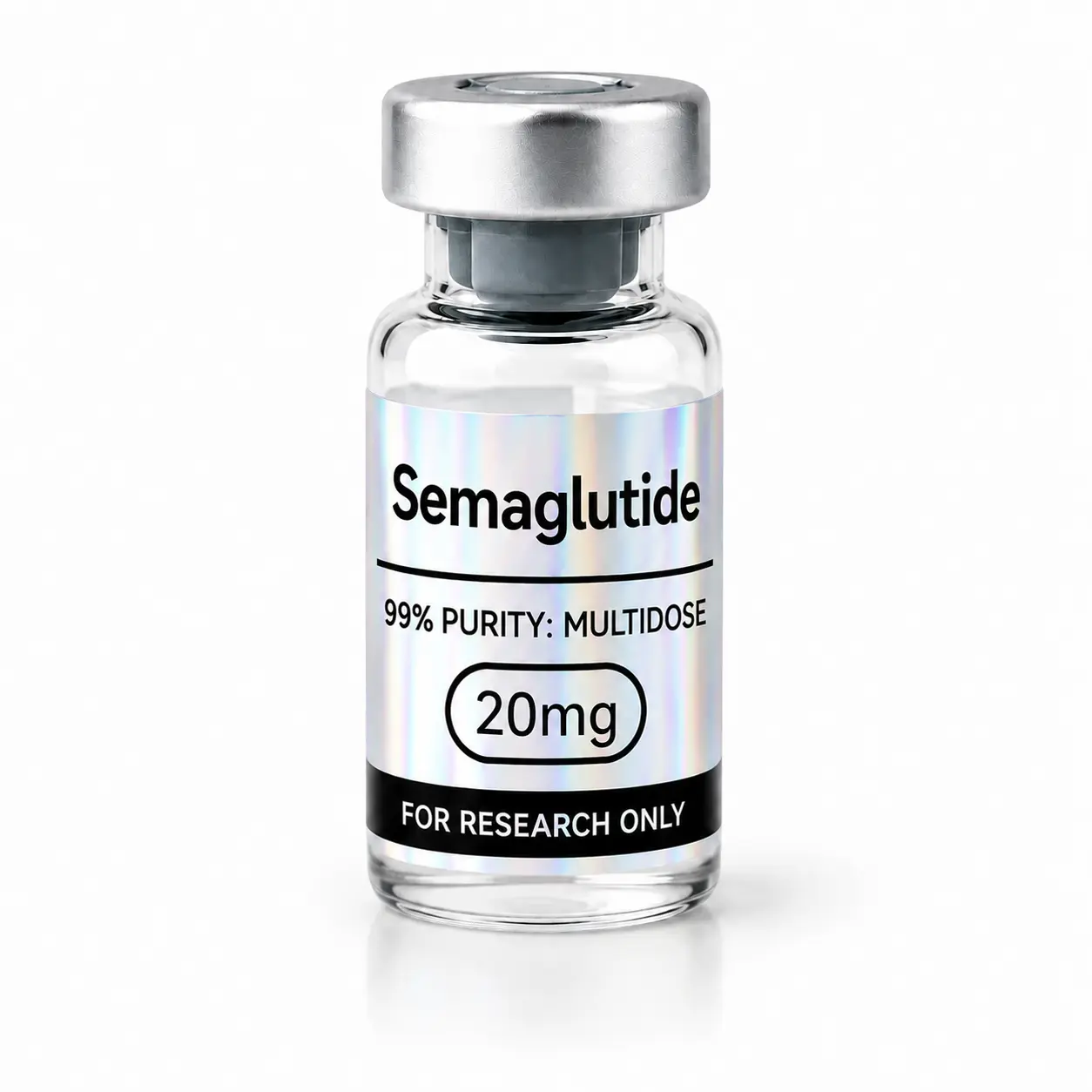
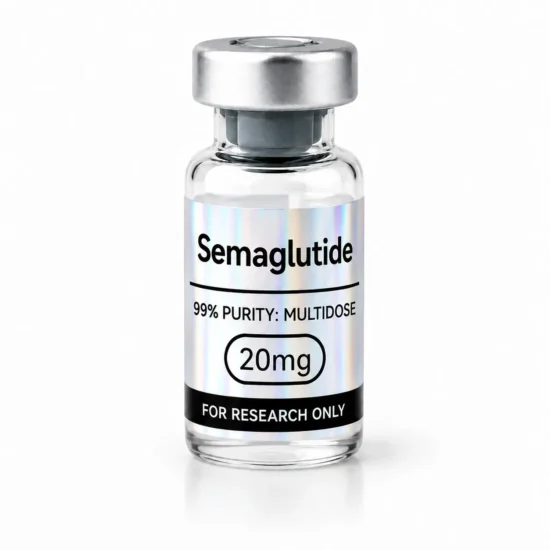
Semaglutide 20mg is a high-purity research peptide supplied as a white to off-white lyophilized powder in a sterile multidose vial. Semaglutide is a GLP-1 receptor agonist studied in laboratory research involving GLP-1 receptor biology, glucose homeostasis, metabolic regulation, endocrine signaling, energy-balance pathways, insulin signaling, and peptide pharmacology. Research use only; not for human or veterinary use.
In stock (can be backordered)
Semaglutide 20mg is a high-purity research peptide supplied for laboratory and scientific research involving GLP-1 receptor biology, metabolic signaling, endocrine pathways, and molecular pharmacology. The product is supplied as a white to off-white lyophilized powder with ≥99% stated purity in a sterile multidose vial.
Semaglutide is a long-acting analogue of glucagon-like peptide-1 (GLP-1) and acts as a GLP-1 receptor agonist. Its receptor activity has made semaglutide an extensively studied research compound for investigating GLP-1 receptor signaling, glucose homeostasis, insulin-related pathways, energy regulation, and broader metabolic biology. Recent literature continues to examine the molecular mechanisms underlying semaglutide activity and GLP-1 receptor signaling.
This Semaglutide 20mg research peptide is intended exclusively for controlled laboratory and scientific research.
Product Specifications
- Product: Semaglutide
- Strength: 20mg
- Purity: ≥99%
- Format: Lyophilized powder
- Grade: Research Grade
- Appearance: White to off-white
- Packaging: Sterile multidose vial
- Storage: 2–8°C
- Intended Use: Laboratory research only
What Is Semaglutide?
Semaglutide is a synthetic peptide analogue of GLP-1 and is classified pharmacologically as a GLP-1 receptor agonist.
The GLP-1 receptor is a class B1 G-protein-coupled receptor involved in signaling pathways associated with glucose homeostasis and endocrine regulation. Structural pharmacology research has investigated how semaglutide and other GLP-1 receptor agonists interact with and activate GLP-1 receptors, providing insight into receptor conformational changes and downstream signal transduction.
Because of this well-defined receptor activity, semaglutide is widely studied in molecular, cellular, biochemical, and metabolic research.
Semaglutide 20mg Research Applications
Semaglutide 20mg may be studied in controlled laboratory research involving:
GLP-1 Receptor Biology
Semaglutide provides a research model for investigating GLP-1 receptor activation, receptor pharmacology, ligand-receptor interactions, and downstream intracellular signaling.
Structural and pharmacological research has examined the molecular mechanisms through which GLP-1 receptor agonists, including semaglutide, interact with GLP-1R and produce receptor activation.
Glucose Homeostasis
GLP-1 signaling is closely associated with glucose-regulatory pathways. Semaglutide can therefore be investigated in experimental models examining relationships between GLP-1 receptor activity and glucose homeostasis.
Metabolic Regulation
Semaglutide is extensively studied in metabolic research. Laboratory investigations may examine signaling pathways associated with glucose metabolism, endocrine communication, lipid metabolism, energy regulation, and related cellular processes.
Recent reviews continue to examine semaglutide’s molecular effects across metabolic pathways, including glucose regulation, lipid-related processes, and broader systemic signaling.
Endocrine Signaling
As a GLP-1 receptor agonist, semaglutide provides a research model for investigating endocrine signaling and the interactions between peptide hormones, receptors, and downstream cellular pathways.
Insulin Signaling Research
GLP-1 receptor signaling is associated with glucose-dependent insulin-related pathways. Research involving semaglutide can therefore examine molecular relationships between GLP-1R activation and insulin signaling under controlled experimental conditions.
Energy-Balance Research
Semaglutide has been studied in relation to central and peripheral pathways involved in appetite and energy regulation. Research reviews describe multiple mechanisms through which GLP-1 receptor agonists interact with pathways associated with energy balance.
For a research-use product page, these mechanisms are best understood as areas of scientific investigation, rather than as claims about outcomes in humans.
Peptide Pharmacology
Semaglutide is also relevant to research into peptide structure, receptor selectivity, pharmacological activity, ligand-receptor interactions, and signaling mechanisms.
Molecular and Biochemical Research
Laboratory studies may investigate semaglutide in molecular and biochemical models involving receptor activation, intracellular signaling, gene-expression pathways, metabolic processes, and related cellular responses.
Semaglutide and GLP-1 Receptor Signaling
The GLP-1 receptor is an important target in endocrine and metabolic research. Semaglutide has been investigated as a long-acting GLP-1 receptor agonist, making it a useful compound for studying receptor activation and downstream signaling.
Recent structural pharmacology research has used GLP-1 receptor agonists including semaglutide to investigate the conformational changes associated with receptor activation. These studies help researchers better understand the molecular basis of GLP-1R signaling.
Other reviews have examined the central and peripheral mechanisms associated with GLP-1 receptor agonist activity, including pathways related to appetite, glucose regulation, endocrine signaling, and energy metabolism.
Research Literature
Semaglutide has been extensively investigated in both experimental and clinical research.
A recent 2026 review examined semaglutide from a systems-medicine perspective, integrating clinical research with proteomic and metabolomic investigations into its molecular mechanisms and systemic metabolic effects.
A separate 2025 review examined molecular mechanisms associated with semaglutide and other GLP-1 receptor agonists, including pathways involving glucose homeostasis, insulin signaling, energy expenditure, and lipid metabolism.
These publications provide useful scientific background for researchers studying GLP-1 receptor biology and related metabolic pathways.
Research-Grade Product Features
This Semaglutide research peptide is supplied with specifications designed for laboratory research:
- ≥99% stated purity
- Research-grade material
- White to off-white lyophilized powder
- Sterile multidose vial
- Refrigerated storage requirement
- Suitable for scientific and laboratory research
- Consistent product specification
Researchers should use their own validated laboratory procedures, institutional requirements, and applicable documentation when working with research compounds.
Storage
Store Semaglutide 20mg refrigerated at 2–8°C.
Protect the product from direct light, excessive heat, and moisture. Keep the vial appropriately sealed under suitable laboratory storage conditions.
Laboratories should follow their established storage, handling, documentation, and quality-control procedures.
Canadian Regulatory Context
Semaglutide is also the subject of current Canadian regulatory attention. In January 2026, Health Canada warned consumers about unauthorized and counterfeit GLP-1 products, specifically including semaglutide, noting that unauthorized products have not been assessed for safety, effectiveness, or quality.
In July 2026, Health Canada also announced a permanent injunction preventing Canlab Research from selling unauthorized injectable peptides in Canada. The agency stated that injectable peptides are regulated as prescription drugs in Canada and that unauthorized prescription drugs cannot legally be sold.
Researchers and purchasers should therefore ensure that procurement, possession, handling, and laboratory activities involving peptide research materials comply with applicable Canadian laws and institutional requirements.
Related Research Products
Researchers investigating peptide and metabolic signaling pathways may also explore related BioMatrix research compounds.
For internal topical relevance, consider linking this page to the Retatrutide 20mg research peptide. Retatrutide is particularly relevant to the same broader metabolic research landscape while providing a distinct multi-receptor research model involving GLP-1, GIP, and glucagon signaling.
Research Use Only
For Research Use Only.
This product is intended exclusively for laboratory and scientific research purposes. Not for human or veterinary use.
This product is not intended to diagnose, treat, cure, or prevent any disease and should not be represented as a weight-management, diabetes-treatment, metabolic-treatment, or performance-enhancement product.
Researchers are responsible for following applicable laws, institutional requirements, laboratory safety procedures, and validated research protocols.
Reviews
There are no reviews yet.