
GHK-Cu 50mg – Copper Peptide Research Compound
$35.00
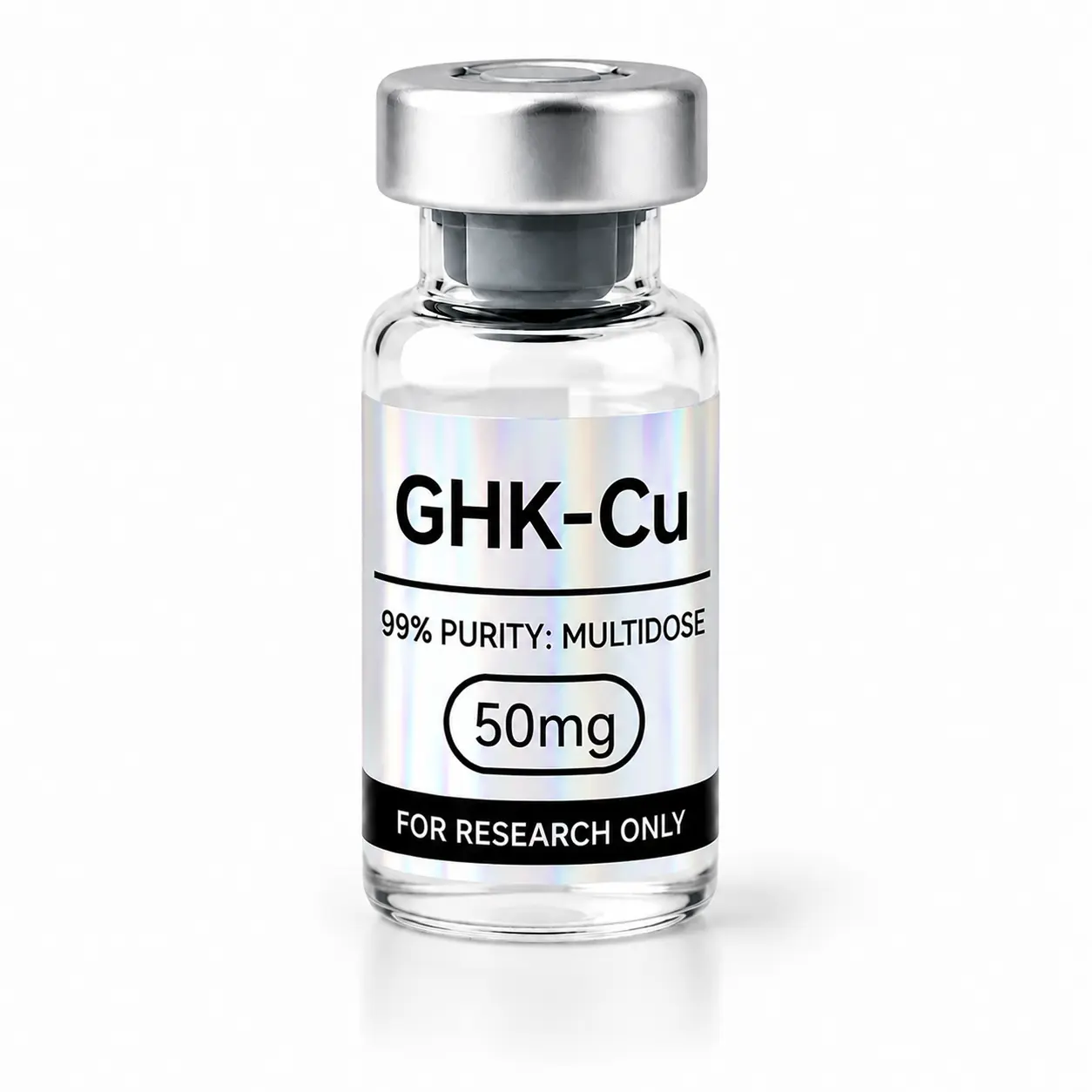
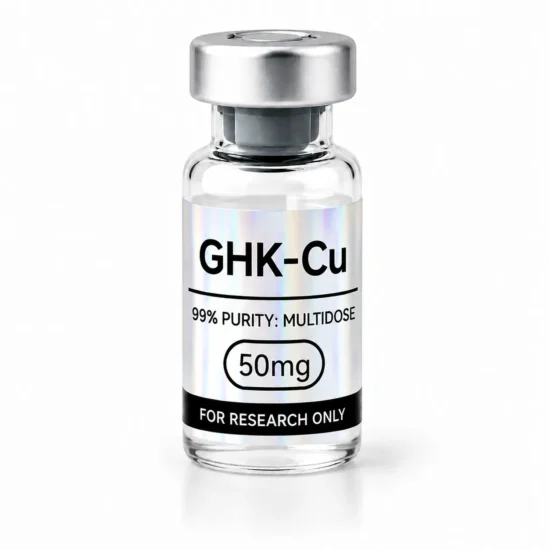
GHK-Cu 50mg is a high-purity copper peptide research compound containing Glycyl-L-Histidyl-L-Lysine Copper at ≥99% stated purity. Supplied as a blue to blue-green lyophilized powder in a sterile multidose vial, it is intended for laboratory research involving extracellular matrix biology, collagen and elastin pathways, cellular signaling, skin biology, tissue-repair mechanisms and molecular research.
Research Use Only. Not for human or veterinary use.
In stock (can be backordered)
GHK-Cu 50mg is a high-purity copper peptide research compound containing Glycyl-L-Histidyl-L-Lysine Copper (GHK-Cu) at ≥99% stated purity. It is supplied as a blue to blue-green lyophilized powder in a sterile multidose vial and is intended exclusively for laboratory research.
GHK-Cu is a copper-binding tripeptide complex that has been investigated across several areas of molecular and cellular biology. Research involving GHK-Cu includes extracellular matrix biology, collagen and elastin pathways, cellular signaling, tissue-repair mechanisms, skin biology and copper-peptide research.
Product Specifications
- Product: GHK-Cu (Glycyl-L-Histidyl-L-Lysine Copper)
- Strength: 50mg
- Purity: ≥99%
- Format: Multidose Vial
- Grade: Research Grade
- Appearance: Blue to blue-green lyophilized powder
- Storage: Store refrigerated at 2°C–8°C. Protect from light and moisture.
What Is GHK-Cu?
GHK-Cu is a copper-associated tripeptide consisting of Glycyl-L-Histidyl-L-Lysine complexed with copper. It is commonly studied as part of the broader field of copper-peptide and extracellular matrix research.
The biological literature surrounding GHK-Cu includes investigations into cellular signaling, extracellular matrix components and processes associated with collagen and elastin biology. A recent 2026 systematic review identified GHK-Cu research across preclinical and limited clinical studies, with preclinical findings involving extracellular matrix synthesis, angiogenesis, cellular proliferation and inflammatory signaling. The review also emphasized methodological variability and the limited number of well-designed clinical studies.
For laboratory research, these findings provide scientific context rather than evidence of a specific therapeutic or cosmetic outcome.
GHK-Cu 50mg Research Applications
GHK-Cu 50mg may be relevant to laboratory investigations involving:
- Skin biology
- Extracellular matrix biology
- Collagen research
- Elastin research
- Cellular signaling
- Copper-peptide biology
- Tissue-repair mechanisms
- Cellular regeneration research
- Hair follicle biology
- Molecular and biochemical research
Researchers can investigate GHK-Cu within cellular and molecular models designed to examine specific biological pathways. The appropriate research application depends on the experimental system, methodology and research objective.
Extracellular Matrix Research
The extracellular matrix (ECM) is a complex network of proteins and other molecules that provides structural and biochemical support to cells and tissues. Collagens, elastin-associated structures, glycosaminoglycans and other matrix components contribute to tissue architecture and cellular interactions.
GHK-Cu has been investigated in relation to extracellular matrix biology, including research involving collagen and other matrix-associated processes. Recent literature has reported preclinical investigations into extracellular matrix synthesis and related cellular mechanisms.
These research findings make GHK-Cu relevant to experimental studies examining how copper-peptide signaling interacts with cellular and extracellular matrix pathways.
Collagen and Elastin Research
Collagen and elastin are important structural components of connective tissues. Research into these proteins can involve fibroblast activity, extracellular matrix organization, protein expression and matrix remodeling.
GHK-Cu is frequently investigated within this scientific area because of its association with copper-peptide biology and extracellular matrix research.
Studies involving copper tripeptide-1 have also examined elastin-related pathways and extracellular matrix architecture in experimental skin models.
Researchers should distinguish these experimental findings from claims regarding human cosmetic or therapeutic outcomes.
Cellular Signaling Research
GHK-Cu research extends beyond structural proteins and includes investigations into cellular signaling pathways.
Laboratory studies may examine how GHK-Cu interacts with cellular processes involving:
- Cellular communication
- Extracellular matrix signaling
- Inflammatory pathways
- Protein expression
- Fibroblast-related biology
- Tissue-associated cellular responses
- Copper-dependent biological processes
The specific molecular response can depend on the experimental model, concentration, formulation and surrounding biological conditions. Researchers should therefore evaluate published findings within the context of the individual experimental system.
Research-Grade Quality
BioMatrix Compounds supplies GHK-Cu 50mg as a research-grade compound with ≥99% stated purity.
The product is supplied as a blue to blue-green lyophilized powder in a sterile multidose vial. Product specifications are provided to help researchers evaluate the compound according to their laboratory requirements.
Where available, researchers should review the applicable Certificate of Analysis (COA) and other analytical documentation associated with the product.
Product Features
- ≥99% stated purity
- Research-grade copper peptide
- 50mg strength
- Lyophilized powder
- Sterile multidose vial
- Blue to blue-green appearance
- Refrigerated storage at 2°C–8°C
- Designed for laboratory research
Research Literature
GHK-Cu has been the subject of both preclinical and clinical research, particularly in areas involving skin biology, extracellular matrix processes and regenerative mechanisms.
A 2026 systematic review identified 20 studies involving GHK-Cu, including 18 preclinical studies and 2 randomized controlled trials, while noting variability in study methods and the limited number of well-designed clinical studies.
This distinction is important for research applications: findings observed in cell or animal models should not automatically be interpreted as established human effects.
Researchers can consult peer-reviewed literature to evaluate the biological mechanisms, experimental models and limitations associated with GHK-Cu research.
Storage Information
Store GHK-Cu 50mg refrigerated at 2°C–8°C and protect the product from light and moisture.
Researchers should follow the product-specific storage information provided with the current product and maintain appropriate laboratory handling procedures.
Related Research
Researchers investigating copper-peptide biology may also be interested in related research compounds and formulations available from BioMatrix Compounds.
For example, KLOW peptide blend includes GHK-Cu as one component of a defined multi-peptide research formulation. Researchers can compare the individual GHK-Cu product with combination formulations when investigating different experimental research models.
Canadian Research Context
Canadian purchasers and researchers should understand the distinction between research-use products and Health Canada-authorized drugs.
Health Canada currently lists GHK-Cu among examples of unauthorized injectable peptide drugs and states that injectable peptide drugs are regulated as prescription drugs in Canada. Health Canada has also warned that unauthorized peptide products have not been assessed for safety, effectiveness or quality.
Accordingly, research-use labeling should not be interpreted as authorization for human administration or as an exemption from applicable Canadian requirements.
Researchers and purchasers are responsible for ensuring that procurement, handling, storage, testing and use of research compounds comply with all applicable federal, provincial and local requirements.
Research Use Only
GHK-Cu 50mg is supplied strictly for laboratory research purposes.
This product is not intended for human consumption, self-administration, veterinary use, diagnosis, treatment, prevention or cure of any disease or medical condition.
Information presented on this page is provided for research and educational context only and should not be interpreted as medical, therapeutic or cosmetic advice.
Researchers should evaluate the scientific literature, product documentation and applicable regulatory requirements independently before incorporating GHK-Cu into a laboratory research program.
Reviews
There are no reviews yet.